
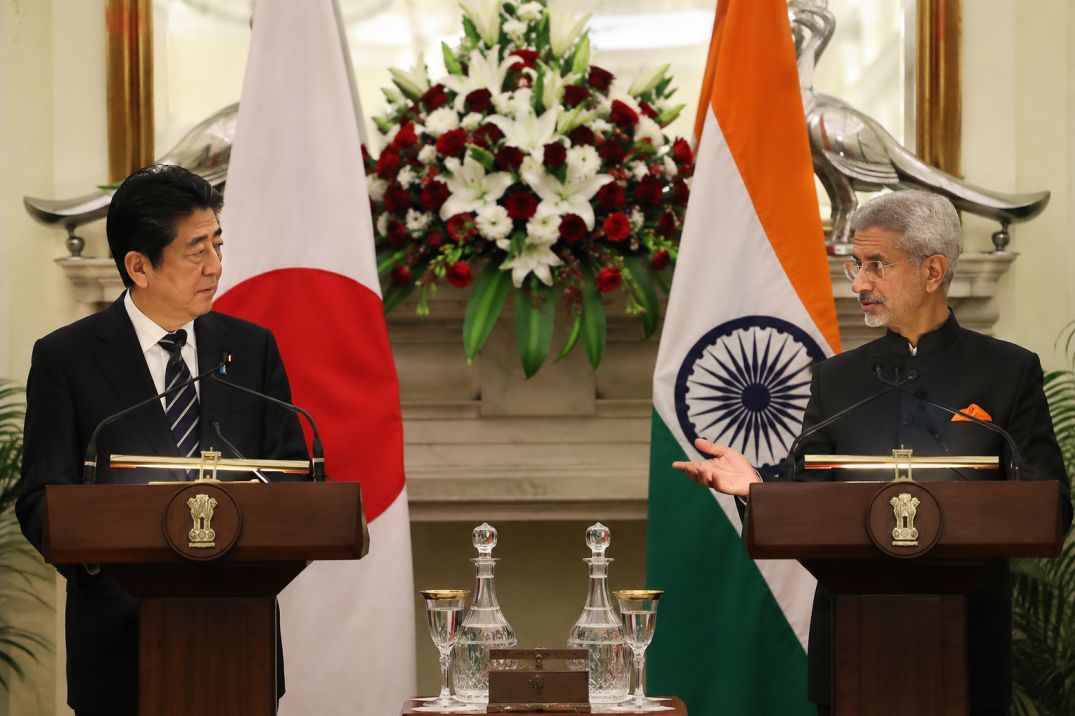
At the 16th India-Japan Annual Summit held in New Delhi, Indian Prime Minister Narendra Modi and his Japanese counterpart, Sanae Takaichi, issued a strong condemnation of terrorism and urged for intensified international measures targeting militant groups based in Pakistan. The leaders specifically named Lashkar-e-Taiba (LeT) and Jaish-e-Mohammad (JeM) among the groups that require global attention. Both leaders underscored their commitment to fighting terrorism in all its manifestations and emphasized that those responsible for such acts must be held accountable.
In a joint statement, Modi and Takaichi denounced last year’s terrorist attack in Pahalgam and referenced the UN Security Council Monitoring Team Report from July 29, 2025, which highlighted The Resistance Front (TRF). They also condemned cross-border terrorism originating from Pakistan and advocated for coordinated international action against all UN-designated terrorist organizations, including Al Qaeda, ISIS/Daesh, Lashkar-e-Taiba, Jaish-e-Mohammad, and their affiliates.
The prime ministers also addressed the Red Fort blast that took place in New Delhi in November 2025, calling for swift justice against those who planned, financed, and executed the attack. They emphasized the necessity of ongoing international collaboration to combat violent extremism and bolster global security against terrorist networks.
Beyond security concerns, the summit aimed to deepen the strategic and economic bonds between India and Japan. Modi warmly welcomed Takaichi on her first official visit to India as Japan’s prime minister, referring to her as a visionary leader and affectionately calling her his “younger sister.” He also pointed out the historical and cultural links between the two nations, noting Takaichi’s roots in Nara Prefecture, a region tied to their shared Buddhist heritage.
In response, Takaichi acknowledged Modi’s kind words, stating that their discussions reflected a mutual commitment to strengthening bilateral relations “as brother and sister.” Her visit, which took place from July 1 to 3 at Modi’s invitation, resulted in various new initiatives aimed at boosting cooperation across strategic, economic, and cultural domains. The summit reinforced the enduring partnership between India and Japan, focusing on regional stability, security, and sustainable development.